
Detailed pre-operative evaluation
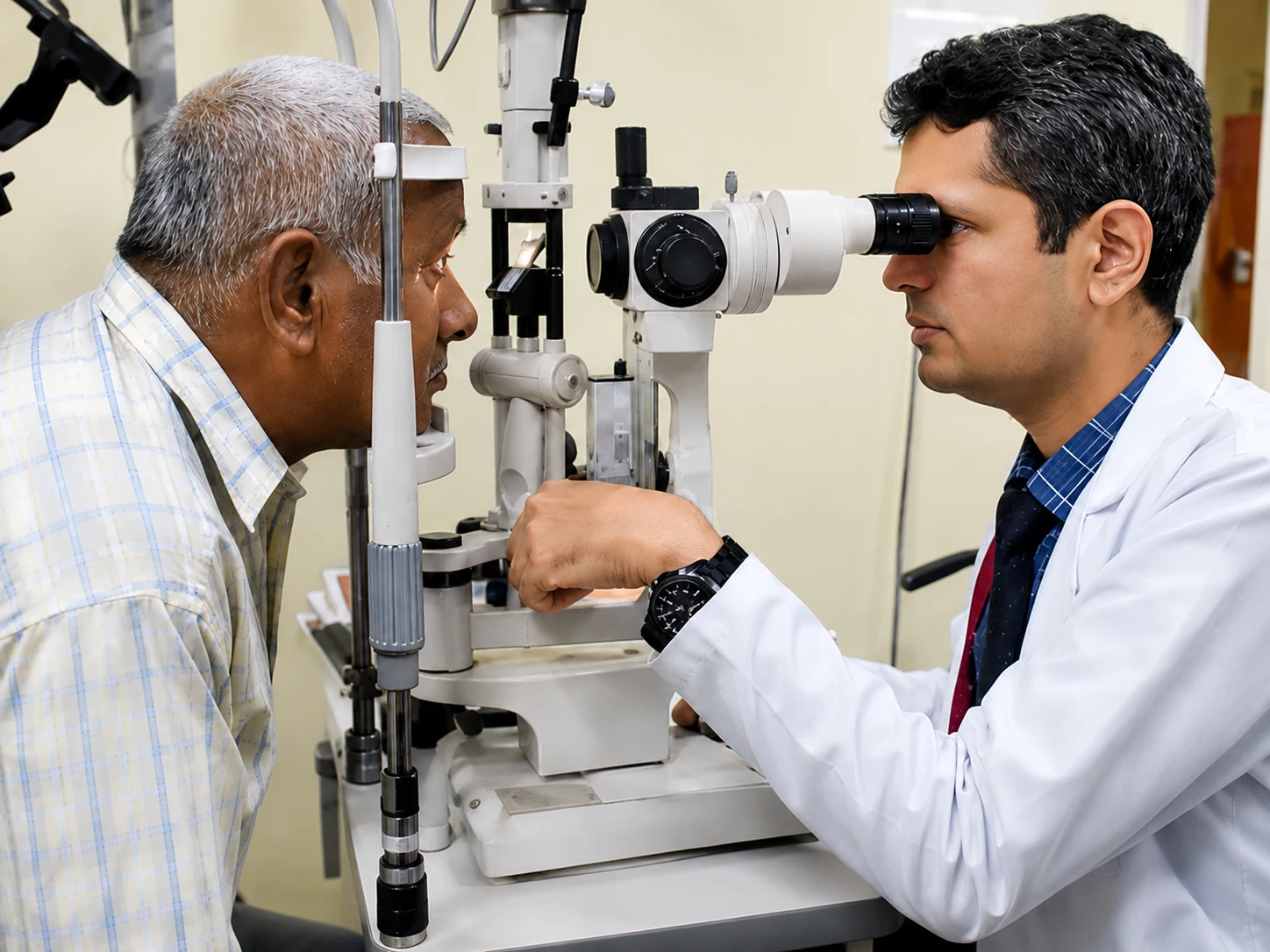
Vision, cataract severity and relevant eye health are assessed before surgery planning.
Cataract care is more than removing a cloudy lens. Good outcomes begin with accurate evaluation, eye measurements, suitable surgical planning, thoughtful IOL selection and structured follow-up. SGVEH brings these elements together in Raipur.
A cataract procedure starts before the operation. Evaluation of the cornea, retina, eye pressure, visual needs and biometric measurements helps the surgeon plan surgery and counsel the patient realistically.
Vision, cataract severity and relevant eye health are assessed before surgery planning.
Biometry and corneal measurements support personalised intraocular-lens power calculation.
The surgical approach is selected according to the cataract, eye condition and patient needs.
Post-operative review helps monitor healing, vision and any concerns after surgery.
Patients often focus only on “which lens?” A safer decision includes the surgeon, diagnostics, eye health, surgical system, lens suitability and post-operative support.
Blurred vision can have more than one cause. Cataract should be confirmed through a complete eye examination.
Retinal and corneal health can influence expected vision and lens-planning decisions.
Eye measurements are essential for calculating the appropriate IOL power.
Lens choice should reflect your eye health, visual goals, lifestyle and clinical suitability.
Ask which technique is appropriate, what anaesthesia is planned and what you can expect on surgery day.
Understand likely benefits, limitations and whether glasses may still be needed for some activities.
Know the eye-drop schedule, precautions, review visits and warning signs that need urgent contact.
The purpose of the pathway is to confirm cataract, identify other eye conditions, calculate lens power, perform the appropriate procedure and support recovery.
Eye examination & cataract assessment.
Biometry, corneal measurements & relevant investigations.
IOL counselling and individualised surgical planning.
Surgery, eye drops, precautions & scheduled follow-up.
Your ophthalmologist will decide which investigations, surgical technique and lens strategy are appropriate after examining your eyes.
Small-incision cataract surgery in which the cloudy natural lens is removed and replaced with an intraocular lens.
Ask about phaco surgery →Manual small-incision cataract surgery may be appropriate in selected eyes depending on cataract type and clinical assessment.
Ask about cataract options →Measurements of the eye help calculate the power of the artificial lens placed during cataract surgery.
See diagnostic planning →Lens choice is based on measurements, corneal and retinal health, visual priorities and medical suitability—not price alone.
Understand IOL choices →Corneal astigmatism may influence surgical planning and whether selected lens strategies are suitable.
Discuss your measurements →Patients with diabetes may need careful retinal assessment and coordinated planning before and after cataract surgery.
Ask for diabetic eye evaluation →Dense cataract, glaucoma, corneal disease or previous eye surgery can require additional assessment and specialist planning.
Meet the care team →Post-operative eye drops, precautions and review visits are an important part of the cataract treatment pathway.
Read recovery FAQs →Cataract treatment can sometimes require cornea, retina, glaucoma or broader ophthalmic assessment. SGVEH's multi-specialty structure allows patients to be routed to relevant expertise when needed.

MBBS, MS (AIIMS New Delhi)
Cataract • Refractive Care • Glaucoma • Neuro-Ophthalmology
View verified profile →
Ophthalmologist
Cataract Care • Comprehensive Ophthalmology • Surgical Eye Care
View verified profile →
MBBS, DOMS • Advanced Cornea Training
Cornea • Keratoconus • Ocular Surface • Corneal Transplant
View verified profile →
Ophthalmologist
Holistic Eye Care • Community Ophthalmology • Institutional Direction
View verified profile →Cataract surgery should be planned after an eye examination. The appropriate surgeon, investigations and lens strategy depend on the individual eye and associated conditions.
Modern cataract care uses measurements and imaging to support IOL calculation, identify corneal or retinal factors and plan surgery. Technology is useful when interpreted in the context of the patient's eye and visual goals.
SGVEH Raipur provides cataract assessment within a multi-specialty eye-care environment, allowing additional cornea, retina, glaucoma or other specialist input when clinically required.
Cataract evaluation, surgical planning, diagnostics and connected multi-specialty ophthalmology.
Common questions from people searching for cataract surgery, phaco surgery and lens options in Raipur.
Clear, patient-friendly information for people searching for cataract or motiyabind surgery in Raipur.
Need cataract guidance? →Cataract surgery is generally considered when cloudy vision starts interfering with reading, driving, work, mobility or other daily activities. The decision should follow an eye examination because other conditions can also reduce vision.
Phacoemulsification is a small-incision technique in which the cloudy natural lens is broken up and removed, followed by implantation of an artificial intraocular lens. The surgeon decides whether phaco or another technique is appropriate for the individual eye.
There is no single best IOL for everyone. Lens selection depends on eye measurements, corneal astigmatism, retinal health, glaucoma status, lifestyle, visual priorities and medical suitability. Your surgeon should explain the benefits and limitations of relevant options.
Many patients notice improvement early, but recovery varies. Use prescribed eye drops, avoid rubbing or contaminating the eye, follow activity precautions and attend scheduled reviews. Your doctor will advise when routine activities can be resumed.
Some patients may still need glasses for distance, near work or specific tasks after surgery. This depends on the implanted lens, pre-existing astigmatism, healing and the health of the rest of the eye.
Associated eye disease can affect planning and visual expectations. Patients may need additional retinal, glaucoma or corneal evaluation before surgery and condition-specific follow-up afterwards.
This page provides patient education, not a diagnosis or a promise of surgical outcome. Cataract treatment and IOL selection require an in-person eye examination, measurements and clinician assessment.
Our team can guide you towards cataract evaluation and the appropriate SGVEH eye-care pathway in Raipur.